Georgia’s climate creates insulation challenges that differ from both northern cold climates and dry desert climates. The combination of hot summers, moderate winters, and high humidity year-round requires insulation strategies that address both thermal resistance and moisture management simultaneously. Here’s what Atlanta homeowners need to know.
Georgia’s Climate Zone 3 — What It Means for Insulation
The International Energy Conservation Code divides the US into climate zones based on heating and cooling demand. Georgia falls primarily in climate zone 3 — hot-humid — which drives specific R-value requirements and product recommendations. The IECC requires R-38 minimum attic insulation for new construction in climate zone 3, with R-49 commonly recommended for existing homes undergoing upgrades.
Climate zone 3 means you’re optimizing primarily for cooling, not heating. The key metric is how well your insulation prevents radiant heat gain through the roof and walls from forcing your HVAC system to run continuously. In Atlanta, where air conditioning runs from April through October, this is the dominant energy cost in most homes.
Attic Insulation — The Highest Priority in Atlanta
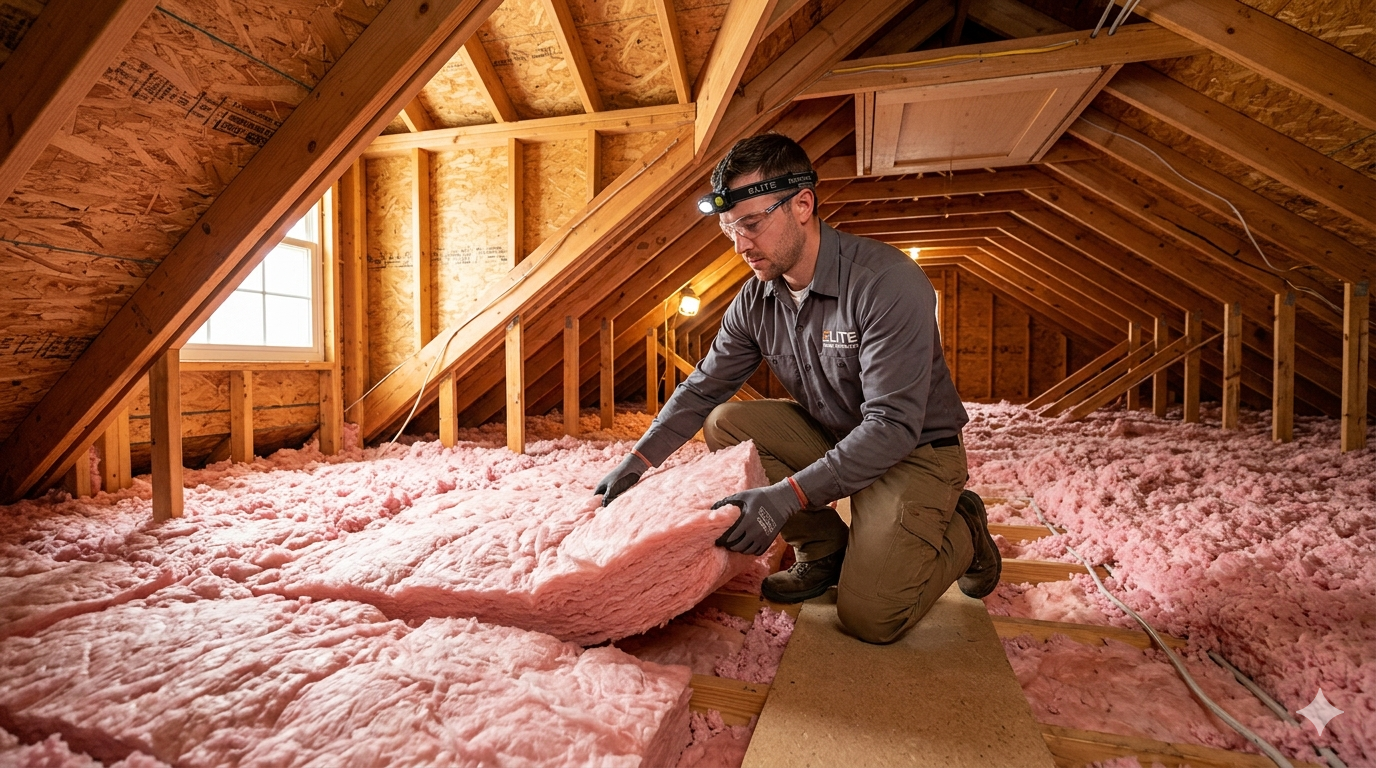
The attic is where insulation makes the biggest difference in Georgia’s climate. Attic temperatures in Atlanta routinely reach 130–145°F during peak summer — a heat source that drives directly through inadequately insulated ceilings into living spaces. Bringing attic insulation to R-49 is the single highest-impact energy upgrade for most Atlanta homes.
Blown-in fiberglass or cellulose is the most cost-effective approach for most Atlanta attics. Cellulose provides slightly better air resistance at equivalent R-values — meaningful in older Atlanta homes with significant air leakage. Both products are appropriate for Georgia’s climate.
Spray foam roofline encapsulation — applying closed-cell spray foam to the underside of the roof deck — is the premium option for homes with HVAC equipment in the attic. It brings the attic into conditioned space and dramatically improves system efficiency.
Humidity Control — The Factor Most Homeowners Miss
Georgia’s humidity adds a dimension to insulation performance that pure R-value doesn’t capture. When humid outdoor air infiltrates the building envelope, it carries moisture that condenses on cooler surfaces inside walls and attics — creating mold conditions and reducing insulation R-value over time. Air sealing is as important as R-value in Georgia’s climate.
Closed-cell spray foam addresses both simultaneously — it provides excellent R-value per inch AND acts as a vapor barrier. For Atlanta crawl spaces, rim joists, and basement walls, closed-cell spray foam is the best-performing product in Georgia’s humid environment.
What About Wall Insulation in Atlanta?
Wall insulation in existing Atlanta homes is typically addressed only during renovation when walls are opened. For new construction or major renovation, closed-cell spray foam in wall cavities provides the best performance. For existing homes, the attic and crawl space are significantly higher-impact upgrade opportunities than wall insulation.
Georgia Radiant Barrier — Worth It?
Radiant barriers — reflective foil products installed in the attic — reduce radiant heat gain from the roof deck. They’re more effective in hot climates like Georgia’s than in cold climates. For Atlanta homes, a radiant barrier combined with blown-in insulation to R-49 provides better performance than insulation alone. However, the cost-effectiveness depends on your specific attic configuration — we assess this during the free inspection.
For a free insulation assessment in Atlanta or anywhere in the metro, call (404) 620-6333.